Best Living Walls for Living Rooms: Ultimate Interior Design Guide
Residential architecture and interior design have increasingly embraced biophilic principles to transform domestic spaces into restorative sanctuaries. Furthermore, contemporary living rooms serve as the central social and psychological hub of the home, making the integration of organic elements both an aesthetic and a wellness-driven priority. Within this domestic design movement, vertical living installations have evolved from basic hanging planters into sophisticated green wall systems that anchor living room focal points. However, introducing living botanical systems into climate-controlled residential living spaces introduces distinct challenges regarding ambient humidity control, silent water circulation, and specialized horticultural lighting.
Evaluating vertical vegetation for domestic living rooms demands an analytical approach that balances visual warmth against long-term indoor durability. Unlike commercial lobbies or outdoor patios, residential living rooms experience quiet daily relaxation, furniture proximity, and stringent acoustic considerations. Therefore, identifying the best living walls for living rooms involves more than simply mounting exterior modular cassettes on an interior wall. It requires a comprehensive study of whisper-quiet closed-loop irrigation, slim-profile architectural framing, and shade-tolerant foliage that thrives under interior living room lighting.
This authoritative reference manual delivers an exhaustive analysis of vertical vegetation configurations tailored specifically for residential living rooms, family spaces, and modern apartments. The following sections examine structural engineering principles, physiological plant limitations, economic lifecycles, and domestic risk management frameworks. Through meticulous exploration, this resource establishes a definitive benchmark for informed decision-making in living room green wall development.
Understanding “best living walls for living rooms”
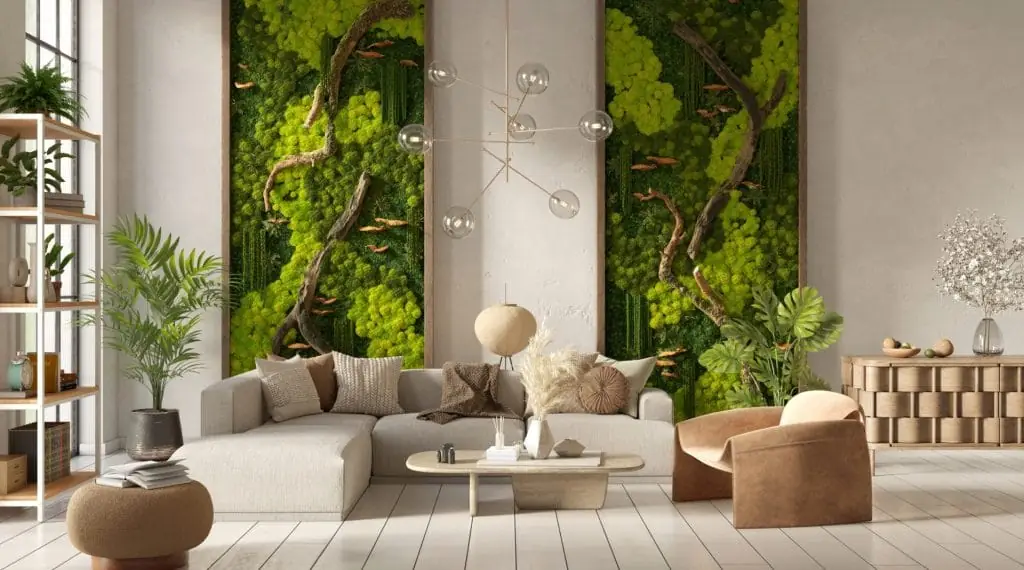
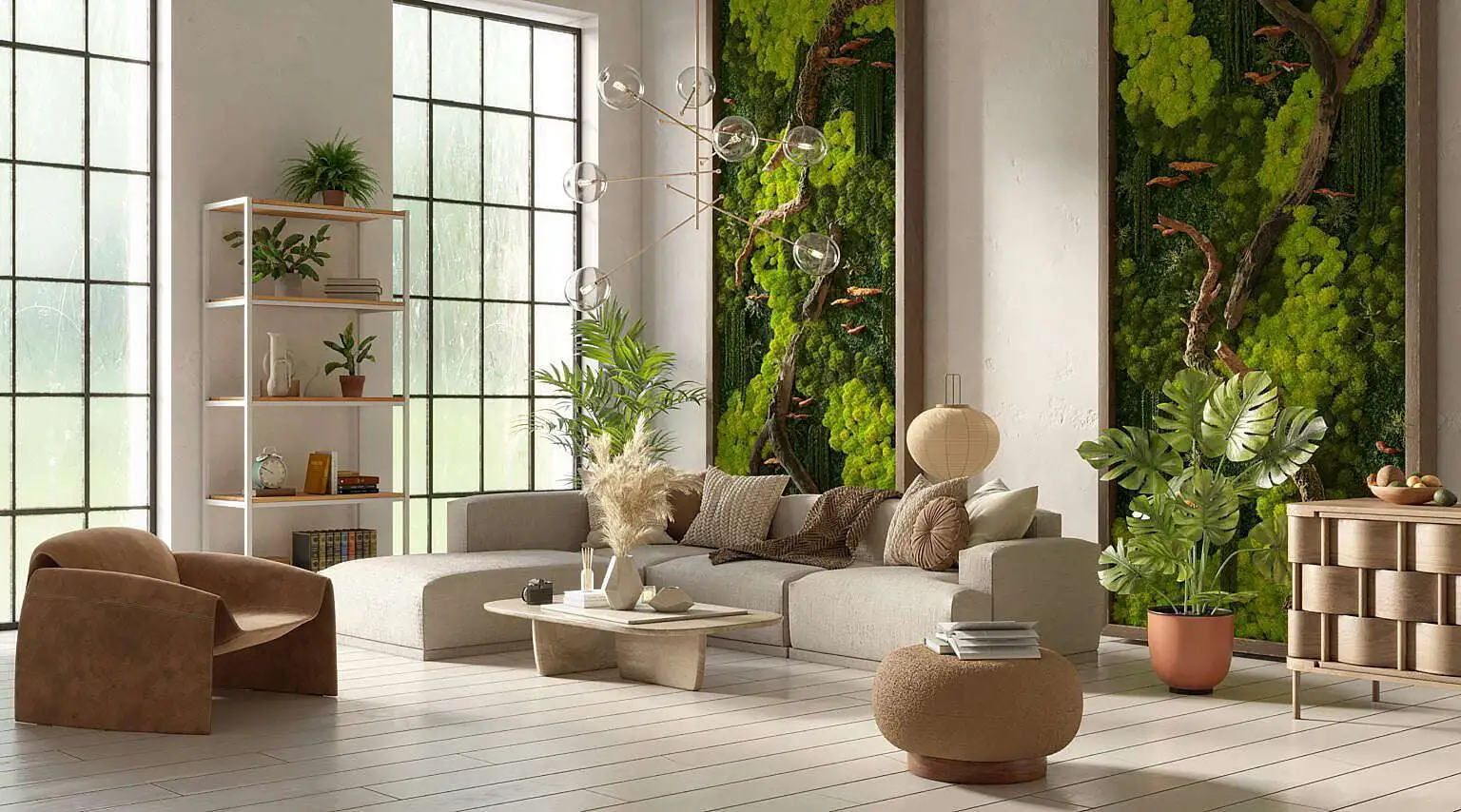
The search for the best living walls for living rooms involves navigating a complex intersection of domestic interior design harmony, silent mechanical operation, and indoor plant physiology rather than simply replicating commercial office bio-walls. Homeowners and interior decorators frequently fall into the trap of assuming that standard commercial-grade pumps and loud irrigation manifolds can operate inside quiet family living areas without causing disruption. In professional practice, living room installations require acoustic dampening, discreet water reservoirs, and integration with existing interior trim and furniture layouts.
Common misunderstandings often focus on the belief that living room green walls require no artificial lighting if the room features large windows or sliding glass doors. This oversimplification ignores the reality that interior living room walls often sit perpendicular to windows, receiving insufficient direct photon flux for dense foliage survival. Another frequent misstep is underestimating how indoor heating and air conditioning drafts can cause rapid leaf desiccation and premature plant decline.
To evaluate living room green wall systems accurately, planners must examine mechanical and aesthetic realities in tandem. Ultra-slim felt pocket panels mounted over waterproof backing boards offer minimal wall protrusion and a seamless botanical aesthetic, but they demand diligent manual or semi-automated watering oversight. Conversely, fully automated hydroponic cassette frames provide effortless water management and vibrant plant vigor, but they require professional plumbing and electrical integration behind drywall. Systematic comparison clarifies these operational trade-offs, ensuring that any selected installation elevates living room elegance without disturbing domestic tranquility.
Deep Contextual Background and Evolution
The integration of vertical vegetation within residential living rooms traces a clear lineage from traditional potted floor palms and macrame hanging baskets to engineered interior living wall systems. Early interior stylists relied heavily on heavy ceramic floor urns placed in room corners or window sills. While classic, traditional floor planters consumed valuable living room floor space, crowded seating layouts, and offered zero vertical green coverage.
The contemporary paradigm of engineered living room vertical gardens emerged from advancements in quiet indoor hydroponic pumps, full-spectrum architectural LED grow lights, and lightweight polymer backer boards. Pioneering residential architects demonstrated that lush, living botanical walls could serve as stunning architectural focal points behind sofas or media centers without requiring extensive structural floor modifications. Translating these systems into residential environments required shifting from loud, commercial-scale plumbing setups to whisper-quiet, closed-loop domestic water reservoirs.
Simultaneously, the modern consumer emphasis on biophilic home design, indoor air quality, and mental well-being accelerated domestic adoption. Homeowners consistently report enhanced relaxation, reduced stress, and heightened visual satisfaction when resting within biophilically rich living spaces. Today, configurations categorized among the best living walls for living rooms function as sophisticated architectural art pieces that redefine modern home interior design.
Conceptual Frameworks and Mental Models
Navigating the complexities of living room vertical garden design requires structured mental models that organize aesthetic, acoustic, and spatial variables.
1. The Focal Wall Visual Hierarchy Model
A living room green wall typically serves as the primary visual anchor behind a main sofa or fireplace. This mental model evaluates how plant texture, color contrast, and framing lines create an artistic focal point without visually overpowering the room.
2. The Acoustic Dampening and Sound Absorption Framework
Living rooms require quiet acoustics for conversation and media enjoyment. This model analyzes how dense vertical plant biomass absorbs mid-to-high frequency sound waves, reducing room echo and softening ambient noise.
3. The Furniture Proximity and Clearance Envelope
Living rooms feature couches, coffee tables, and media consoles close to walls. This model governs the physical depth of vertical installations, ensuring that frames do not interfere with seating comfort or head clearance.
Key Categories, Variations, and Structural Trade-Offs
The residential interior market features several distinct architectural system designs suitable for living room environments, each defined by specific mounting methods and aesthetic profiles.
1. Ultra-Slim Geotextile Felt Wall Panels
Marine-grade synthetic felt sheets bolted over waterproof backer boards, featuring horizontal planting slits and a slim profile.
-
Advantages: Minimal wall protrusion (under 2 inches); flexible plant placement; seamless living tapestry appearance.
-
Disadvantages: Requires meticulous waterproofing behind backing; fabric drying requires careful monitoring.
2. Modular Cassette Grid Systems
Interlocking rigid polymer cartridges mounted on sealed rail systems, housing individual soil or inert media blocks.
-
Advantages: Absolute water containment security; easy individual cartridge swapping; clean architectural lines.
-
Disadvantages: Protrudes further into the room (3 to 5 inches); higher component cost.
3. Backlit Architectural Glass-Framed Living Panels
Vertical planting matrices encased in sleek metal or wood frames with integrated perimeter LED backlighting behind frosted glass borders.
-
Advantages: Exceptional high-end aesthetic; acts as both art piece and green wall; controlled internal lighting.
-
Disadvantages: Complex electrical installation; restricted plant root volume.
4. Freestanding Double-Sided Living Partitions
Self-supporting mobile green walls placed strategically to divide open-plan living and dining areas.
-
Advantages: Zero permanent wall drilling required; creates functional room zoning; highly portable.
-
Disadvantages: Occupies valuable living room floor footprint; restricts open sightlines.
5. Magnetic Backsplash Pod Arrays
Individual metal planters adhering magnetically to a wall-mounted steel backplate behind accent seating areas.
-
Advantages: Highly modular; easy individual plant maintenance; ideal for apartment living rooms.
-
Disadvantages: Very small soil volume dries out rapidly; strict weight capacity limits.
6. Automated Hydroponic Living Art Frames
Self-contained vertical frames featuring continuous whisper-quiet recirculation pumps and digital nutrient reservoirs.
-
Advantages: Superior plant vigor; automated irrigation; ideal for luxury home installations.
-
Disadvantages: Requires electrical power connection; potential mechanical pump hum if not properly acoustically isolated.
| System Architecture | Protrusion Depth | Acoustic Performance | Best Living Room Environment | Primary Maintenance Focus |
| Slim Felt Wall Panels | 1.5 – 2.5 inches | Moderate | Modern minimalist apartments | Moisture barrier checks & pruning |
| Modular Cassette Grids | 3 – 5 inches | High | Spacious family living rooms | Cartridge flushing & swapping |
| Backlit Glass Panels | 4 – 6 inches | High | Luxury penthouse living rooms | LED driver & plant upkeep |
| Freestanding Partitions | 12 – 18 inches | Maximum | Open-plan living/dining spaces | Base stability & reservoir check |
| Magnetic Pod Arrays | 2 – 3 inches | Low | Compact rental living rooms | Frequent manual hydration |
| Automated Hydroponic Frames | 4 – 7 inches | High | Custom architectural homes | Pump hygiene & reservoir checks |
Decision Logic for System Selection: Homeowners seeking a seamless, low-profile botanical tapestry behind a living room sofa should prioritize ultra-slim geotextile felt panels. Conversely, custom luxury homes seeking absolute water security and automated operation can install modular cassette grids when evaluating the best living walls for living rooms.
Detailed Real-World Scenarios and Implementation Constraints
Examining five distinct living room scenarios clarifies how these structural plans perform in practice.
A : Contemporary Open-Plan Suburban Home
-
Context: A spacious family living room featuring high ceilings, hardwood flooring, and abundant natural light from large rear windows.
-
Selected Blueprint: Large-scale modular cassette grid installed on the main accent wall behind the sectional sofa.
-
Constraints & Failure Modes: High visibility and heavy family usage demand robust plant health and absolute water leak prevention to protect hardwood floors.
-
Second-Order Effects: Anchors the vast open-plan space with organic warmth while dampening family room noise echoes.
B : Urban High-Rise Apartment Living Room
-
Context: A high-rise apartment living room with limited floor space, concrete walls, and strict lease rules regarding drilling.
-
Selected Blueprint: Freestanding double-sided living partition dividing the seating area from the entryway foyer.
-
Constraints & Failure Modes: Zero wall penetration requirement means stability relies on floor placement without permanent masonry anchors.
-
Second-Order Effects: Creates functional spatial zoning and privacy without requiring permanent structural alterations.
C : Minimalist Luxury Penthouse Foyer
-
Context: A sophisticated penthouse living room featuring clean architectural lines, recessed ceiling coves, and fine art collections.
-
Selected Blueprint: Backlit architectural glass-framed living panel mounted adjacent to the fireplace feature wall.
-
Constraints & Failure Modes: High-end aesthetic standards require flawless lighting color temperature and zero visible irrigation tubing.
-
Second-Order Effects: Functions as a living art installation that complements luxury interior design finishes.
D : Rental Townhouse Family Room
-
Context: A rental property family room where permanent wall modifications are prohibited and budgets are moderate.
-
Selected Blueprint: Magnetic backsplash pod array mounted via heavy-duty non-marring adhesive steel plates behind the TV console.
-
Constraints & Failure Modes: Small soil volumes dry out quickly under indoor heating vents, requiring consistent manual watering.
-
Second-Order Effects: Delivers immediate biophilic character that is easily removed upon lease termination.
E : Eclectic Historic Home Living Room
-
Context: A traditional living room featuring vintage crown molding, warm wood tones, and antique furnishings.
-
Selected Blueprint: Ultra-slim geotextile felt wall panel framed with custom antique wood molding to match existing millwork.
-
Constraints & Failure Modes: Integrating modern vertical garden technology into historic architecture requires careful trim concealment.
-
Second-Order Effects: Bridges modern biophilic design with classic heritage architecture seamlessly.
Planning, Cost, and Resource Dynamics
Budgeting for a living room vertical garden requires evaluating upfront capital expenditures alongside ongoing operational expenses. Treating the installation as a permanent interior architectural asset ensures realistic financial forecasting.
Direct capital costs cover structural framing, waterproof backer membranes, integrated architectural LED grow lights, whisper-quiet recirculation pumps, specialized potting media, and premium plant stock. Indirect costs encompass treated tap water, electricity for lighting and pumps, nutrient solutions, and optional professional maintenance service retainers.
Financial allocations span distinct project tiers. Entry-level magnetic pod arrays or DIY wall panels range from $150 to $400. Mid-range slim felt pocket panels and modular cassette grids require $600 to $2,000. Premium custom backlit glass panels and commercial-grade automated hydroponic frames range from $3,000 to $9,000+. Ongoing operational maintenance costs typically total $15 to $50 per month.
Opportunity costs also influence planning. Dedicating prime living room wall space to vertical vegetation means forgoing large artwork or built-in bookshelves. Furthermore, any accidental water overflow can instantly stain expensive living room rugs or warp hardwood flooring.
| Investment Tier | Initial Capital Cost (CapEx) | Monthly Operating Cost (OpEx) | Expected System Lifespan | Primary Maintenance Requirement |
| Entry-Level (Pods/DIY Panels) | $150 – $400 | $5 – $15 | 3 – 5 years | Manual watering & leaf dusting |
| Mid-Range (Felts/Cassettes) | $600 – $2,000 | $15 – $35 | 5 – 8 years | Irrigation line flushing & pruning |
| Premium (Backlit/Hydroponics) | $3,000 – $9,000+ | $40 – $100+ | 10 – 15+ years | Pump service & LED driver checks |
Tools, Horticultural Technologies, and Support Systems
Operating a reliable living room vertical garden requires an ecosystem of silent hardware, automated irrigation controllers, and discreet maintenance tools.
-
Whisper-Quiet Submersible Water Pumps: Specialty pumps engineered with acoustic dampening so mechanical hum is completely inaudible in quiet living rooms.
-
Concealed Full-Spectrum LED Grow Lights: High-CRI architectural light fixtures engineered to blend with interior track lighting while driving plant photosynthesis.
-
Smart Leak-Detection Auto-Shutoff Valves: Solenoid valves connected to floor sensors that cut water supply instantly upon detecting plumbing leaks.
-
Precision Dosing Fertigation Timers: Automated digital controllers that inject exact micro-nutrient ratios into closed-loop reservoirs.
-
Soft-Bristled Foliage Dusting Brushes: Precision tools used by homeowners to keep living room plant leaves clean from indoor settling dust.
-
Waterproof Wall Protection Liners: Heavy-duty polymer sheets installed behind wall frames to protect living room drywall and studs.
-
Long-Reach Precision Pruning Scissors: Specialized shears designed for trimming dead leaves in tight living room wall arrays.
-
Digital Humidity and Temperature Monitors: Compact wireless sensors tracking microclimatic shifts near seating areas.
Risk Landscape, Failure Modes, and Compounding Hazards
Vertical installations in prominent living rooms concentrate aesthetic, hydraulic, and structural risks. Understanding failure taxonomies prevents minor issues from becoming costly domestic property damage.
1. Water Damage to Hardwood Flooring and Rugs
A leaking plumbing fitting or overflowing reservoir can warp expensive living room hardwood flooring or ruin luxury area rugs.
2. Pump Noise and Living Room Disturbance
A vibrating or noisy irrigation pump installed in a quiet residential living room creates an irritating ambient hum during movie nights or quiet relaxation.
3. Indoor Dust Accumulation and Leaf Choking
Living rooms generate settling dust, lint, and pet dander that coat plant leaves, blocking stomata respiration and dulling visual appeal.
4. HVAC Draft Stress and Leaf Drop
Heating and air conditioning vents blowing directly toward a living room wall frame can cause rapid leaf desiccation and plant shock.
Governance, Maintenance, and Long-Term Adaptation
Maintaining a living room vertical garden requires establishing a discreet, disciplined maintenance routine that integrates smoothly with household schedules.
-
Daily Protocols: Visual inspection of plant turgor, checking LED lighting operation, and ensuring zero floor moisture.
-
Weekly Protocols: Gentle dusting of plant leaves, removing spent foliage, and checking reservoir water levels.
-
Monthly Protocols: Testing nutrient solution chemistry, flushing irrigation drip emitters, and pruning trailing stems to maintain shape.
-
Quarterly Protocols: Deep sanitization of the water recirculation system, inspecting pump impellers, and replacing weak plant cartridges.
-
Annual Protocols: Comprehensive structural audit of wall mounting brackets and electrical connections.
Measurement, Tracking, and Evaluation
Evaluating performance requires monitoring leading and lagging indicators across aesthetic, biological, and operational dimensions.
Quantitative Metrics
-
Visual Foliage Vigor Percentage: Visual percentage of the frame covered by healthy, glossy green biomass (target: >95% coverage).
-
Water Containment Reliability: Zero recorded instances of plumbing leaks or overflow affecting living room flooring (target: 100% safety).
-
Plant Survival Rate: Percentage of botanical stock thriving annually without requiring replacement (target: >90% per year).
-
Acoustic Absorption Impact: Measurable reduction in room sound reverberation and echo (target: noticeable improvement).
Qualitative Indicators
-
Living Room Ambiance: Warm, organic visual atmosphere that enhances overall interior design and relaxation.
-
Foliage Cleanliness: Pristine leaf coloration free from dust accumulation or water spots.
-
Acoustic Serenity: Complete absence of mechanical pump noise or water dripping sounds during quiet hours.
Common Misconceptions and Oversimplifications
-
Myth 1: Living room green walls require no artificial lighting if the room has windows. Correction: Interior walls often sit in shadows, making dedicated full-spectrum LED grow lights mandatory.
-
Myth 2: Any common houseplant can thrive in an interior vertical wall frame. Correction: Vertical wall systems require specific trailing and compact cultivars like pothos, philodendrons, and ferns.
-
Myth 3: Water leaks cannot happen with small residential wall systems. Correction: Even minor plumbing drips can accumulate over time and ruin expensive living room flooring.
-
Myth 4: Irrigation pumps in living rooms make no noise. Correction: Standard commercial pumps are too loud; living rooms require specialized acoustic-damped residential pumps.
-
Myth 5: Living room plant walls need no dusting. Correction: Indoor settling dust and pet dander coat leaves rapidly, requiring regular manual cleaning.
-
Myth 6: Apartments cannot accommodate vertical living walls. Correction: Freestanding partitions and magnetic pod arrays allow apartment dwellers to enjoy living walls without drilling.
Ethical, Practical, and Contextual Considerations
Integrating living architecture into residential living rooms contributes to domestic biophilic design principles that nurture human psychological well-being. Living rooms equipped with lush vertical greenery offer occupants a restorative sensory escape from urban stress and indoor isolation. Furthermore, utilizing sustainable water recycling systems and energy-efficient LED grow lights ensures that residential indoor gardening remains environmentally responsible and energy-conscious.
Conclusion and Strategic Judgment
Selecting configurations among the best living walls for living rooms demands an uncompromising commitment to silent mechanical operation, absolute water safety, and harmonious interior aesthetics. Whether evaluating ultra-slim felt pocket panels for minimalist apartments or modular cassette grids for spacious family rooms, success is defined by how seamlessly the installation enhances domestic tranquility and interior beauty. By treating living room vertical vegetation as engineered interior architecture, homeowners create enduring biophilic sanctuaries that elevate daily living.